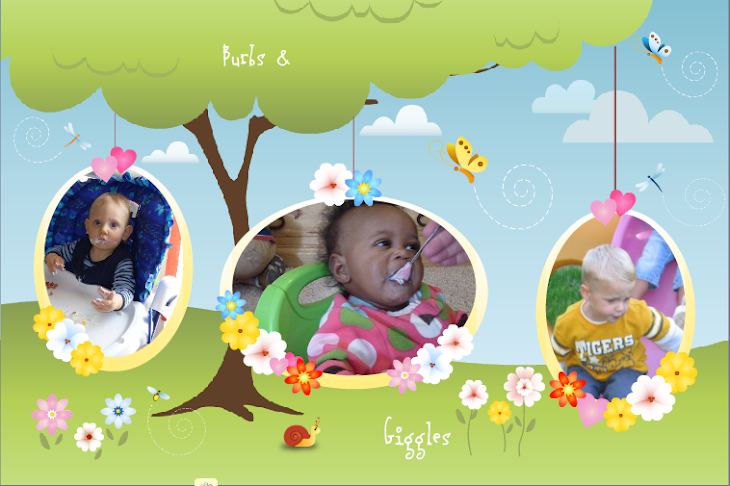
Why In-home Child Care?

A good family home child care can be a great alternative to center care. Home childcare often appeals to parents who want their child in a warm loving home environment. It is comforting and reassuring to kids and they usually have smaller numbers of children than most centers. Your child has all the comforts of a home, only with other children to play and socialize with. Kids have a consistent caregiver and other consistent people in their environment. Your children are exposed to fewer illnesses due to lower child numbers and more sanitized and consistent cleaning. A good home daycare is one you feel comfortable leaving your child in. One where you are encouraged to visit unannounced anytime and feel comfortable roaming around any part of the home that is common area to the children. All areas of the home should be safe and appropriately childproofed. In-home caregivers often become an extended part of your family and an important person in your child's life.


Welcome

Hello all! Welcome to Burps and Giggles Child Care. I have started this blog to supply all my families and potential families with all the information they need about my home care. I will be using this blog as a place to post information about sickness, vacations, payment reminders, personal days and any other pertinent information. I will also post articles on feeding, sleeping, development, behavior etc. as a resource to parents. You will see information about upcoming family activities in the area, sales for children, and links to business' that focus on the needs of your kids. Please feel free to comment on pictures and posts or to add your own exciting news or information as you would like. I welcome your interaction! Email me at t_hunt71@msn.com

References Available Upon Request

Friday, September 21, 2012

Feeding the Picky Eater: 17 tip


When our first few children were toddlers, we dreaded dinnertime. We would prepare all kinds of sensible meals composed of what we thought were healthy, appealing foods. Most of these offerings would end up splattering the high-chair tray and carpeting the floor. To make matters worse, we took our kids' rejection of our cuisine personally, sure that this was a sign of parental lapse on our part. What was wrong? Why were these kids such picky eaters?

Why toddlers are picky. Being a picky eater is part of what it means to be a toddler. We have since learned that there are developmental reasons why kids between one and three years of age peck and poke at their food. After a year of rapid growth (the average one-year-old has tripled her birth weight), toddlers gain weight more slowly. So, of course, they need less food. The fact that these little ones are always on the go also affects their eating patterns. They don't sit still for anything, even food. Snacking their way through the day is more compatible with these busy explorers' lifestyle than sitting down to a full-fledged feast.
Learning this helped us relax. We now realize that our job is simply to buy the right food, prepare it nutritiously (steamed rather than boiled, baked rather than fried), and serve it creatively. We leave the rest up to the kids. How much they eat, when they eat, and if they eat is mostly their responsibility; we've learned to take neither the credit nor the blame.
Toddlers like to binge on one food at a time. They may eat only fruits one day, and vegetables the next. Since erratic eating habits are as normal as toddler mood swings, expect your child to eat well one day and eat practically nothing the next. Toddlers from one to three years need between 1,000 and 1,300 calories a day, yet they may not eat this amount every day. Aim for a nutritionally-balanced week, not a balanced day.
All this is not to say that parents shouldn't encourage their toddlers to eat well and develop healthy food habits. Based on our hands-on experience with eight children, we've developed 17 tactics to tempt little taste buds and minimize mealtime hassles.
1. Offer a nibble tray. Toddlers like to graze their way through a variety of foods, so why not offer them a customized smorgasbord? The first tip from the Sears' kitchen is to offer toddlers a nibble tray. Use an ice-cube tray, a muffin tin, or a compartmentalized dish, and put bite-size portions of colorful and nutritious foods in each section. Call these finger foods playful names that a two-year-old can appreciate, such as:
  • apple moons (thinly sliced)
  • avocado boats (a quarter of an avocado)
  • banana wheels
  • broccoli trees (steamed broccoli florets)
  • carrot swords (cooked and thinly sliced)
  • cheese building blocks
  • egg canoes (hard- boiled egg wedges)
  • little O's (o-shaped cereal)
Place the food on an easy-to-reach table. As your toddler makes his rounds through the house, he can stop, sit down, nibble a bit, and, when he's done, continue on his way. These foods have a table-life of an hour or two.
NUTRITIP: Good Grazing – Good Behavior
A child's demeanor often parallels her eating patterns. Parents often notice that a toddler's behavior deteriorates toward the end of the morning or mid-afternoon. Notice the connection? Behavior is at its worst the longer they go without food. Grazing minimizes blood-sugar swings and lessens the resulting undesirable behavior.
2. Dip it. Young children think that immersing foods in a tasty dip is pure fun (and delightfully messy). Some possibilities to dip into:
  • cottage cheese or tofu dip
  • cream cheese
  • fruit juice-sweetened preserves
  • guacamole
  • peanut butter, thinly spread
  • pureed fruits or vegetables
  • yogurt, plain or sweetened with juice concentrate
Those dips serve equally well as spreads on apple or pear slices, bell-pepper strips, rice cakes, bagels, toast, or other nutritious platforms.
3. Spread it. Toddlers like spreading, or more accurately, smearing. Show them how to use a table knife to spread cheese, peanut butter, and fruit concentrate onto crackers, toast, or rice cakes.
4. Top it. Toddlers are into toppings. Putting nutritious, familiar favorites on top of new and less-desirable foods is a way to broaden the finicky toddler's menu. Favorite toppings are yogurt, cream cheese, melted cheese, guacamole, tomato sauce, applesauce, and peanut butter.
5. Drink it. If your youngster would rather drink than eat, don't despair. Make a smoothie – together. Milk and fruit – along with supplements such as juice, egg powder, wheat germ, yogurt, honey, and peanut butter – can be the basis of very healthy meals. So what if they are consumed through a straw? One note of caution: Avoid any drinks with raw eggs or you'll risk salmonella poisoning.
6. Cut it up. How much a child will eat often depends on how you cut it. Cut sandwiches, pancakes, waffles, and pizza into various shapes using cookie cutters.
7. Package it. Appearance is important. For something new and different, why not use your child's own toy plates for dishing out a snack? Our kids enjoy the unexpected and fanciful when it comes to serving dishes – anything from plastic measuring cups to ice-cream cones.
You can also try the scaled-down approach. Either serve pint-size portions or, when they're available, buy munchkin-size foodstuffs, such as mini bagels, mini quiches, chicken drummettes (the meat part of the wing), and tiny muffins.
8. Become a veggie vendor. I must have heard, "Doctor, he won't eat his vegetables" a thousand times. Yet, the child keeps right on growing. Vegetables require some creative marketing, as they seem to be the most contested food in households with young children. How much vegetables do toddlers need? Although kids should be offered three to five servings of veggies a day, for children under five, each serving need be only a tablespoon for each year of age. In other words, a two- year-old should ideally consume two tablespoons of vegetables three to five times a day. So if you aren't the proud parent of a veggie lover, try the following tricks:
  • Plant a garden with your child. Let her help care for the plants, harvest the ripe vegetables, and wash and prepare them. She will probably be much more interested in eating what she has helped to grow.
  • Slip grated or diced vegetables into favorite foods. Try adding them to rice, cottage cheese, cream cheese, guacamole, or even macaroni and cheese. Zucchini pancakes are a big hit at our house, as are carrot muffins.
  • Camouflage vegetables with a favorite sauce.
  • Use vegetables as finger foods and dip them in a favorite sauce or dip.
  • Using a small cookie cutter, cut the vegetables into interesting shapes.
  • Steam your greens. They are much more flavorful and usually sweeter than when raw.
  • Make veggie art . Create colorful faces with olive- slice eyes, tomato ears, mushroom noses, bell-pepper mustaches, and any other playful features you can think of. Our eighth child, Lauren, loved to put olives on the tip of each finger. "Olive fingers" would then nibble this nutritious and nutrient-dense food off her fingertips. Zucchini pancakes make a terrific face to which you can add pea eyes, a carrot nose, and cheese hair.
  • Concoct creative camouflages. There are all kinds of possible variations on the old standby "cheese in the trees" (cheese melted on steamed broccoli florets). Or, you can all enjoy the pleasure of veggies topped with peanut- butter sauce, a specialty of Asian cuisines.
9. Share it. If your child is going through a picky-eater stage, invite over a friend who is the same age or slightly older whom you know "likes to eat." Your child will catch on. Group feeding lets the other kids set the example.
10. Respect tiny tummies. Keep food servings small. Wondering how much to offer? Here's a rule of thumb – or, rather, of hand. A young child's stomach is approximately the size of his fist. So dole out small portions at first and refill the plate when your child asks for more. This less-is-more meal plan is not only more successful with picky eaters, it also has the added benefit of stabilizing blood-sugar levels, which in turn minimizes mood swings. As most parents know, a hungry kid is generally not a happy kid.
Use what we call "the bite rule" to encourage the reluctant eater: "Take one bite, two bites…" (how ever far you think you can push it without force-feeding). The bite rule at least gets your child to taste a new food, while giving her some control over the feeding. As much as you possibly can, let your child – and his appetite – set the pace for meals. But if you want your child to eat dinner at the same time you do, try to time his snack-meals so that they are at least two hours before dinner.
11. Make it accessible. Give your toddler shelf space. Reserve a low shelf in the refrigerator for a variety of your toddler's favorite (nutritious) foods and drinks. Whenever she wants a snack, open the door for her and let her choose one. This tactic also enables children to eat when they are hungry, an important step in acquiring a healthy attitude about food.
12. Use sit-still strategies. One reason why toddlers don't like to sit still at the family table is that their feet dangle. Try sitting on a stool while eating. You naturally begin to squirm and want to get up and move around. Children are likely to sit and eat longer at a child-size table and chair where their feet touch the ground.
13. Turn meals upside down. The distinctions between breakfast, lunch, and dinner have little meaning to a child. If your youngster insists on eating pizza in the morning or fruit and cereal in the evening, go with it – better than her not eating at all. This is not to say that you should become a short-order cook, filling lots of special requests, but why not let your toddler set the menu sometimes? Other family members will probably enjoy the novelty of waffles and hash browns for dinner.
14. Let them cook. Children are more likely to eat their own creations, so, when appropriate, let your child help prepare the food. Use cookie cutters to create edible designs out of foods like cheese, bread, thin meat slices, or cooked lasagna noodles. Give your assistant such jobs as tearing and washing lettuce, scrubbing potatoes, or stirring batter. Put pancake batter in a squeeze bottle and let your child supervise as you squeeze the batter onto the hot griddle in fun shapes, such as hearts, numbers, letters, or even spell the child's name.
15. Make every calorie count. Offer your child foods that pack lots of nutrition into small doses. This is particularly important for toddlers who are often as active as rabbits, but who seem to eat like mice.
Nutrient-dense foods that most children are willing to eat include:
  • California Avocados
  • Pasta
  • Broccoli
  • Peanut butter
  • Brown rice and other grains
  • Potatoes
  • Cheese
  • Poultry
  • Eggs
  • Squash
  • Fish
  • Sweet potatoes
  • Kidney beans
  • Tofu
  • Yogurt
16. Count on inconsistency. For young children, what and how much they are willing to eat may vary daily. This capriciousness is due in large part to their ambivalence about independence, and eating is an area where they can act out this confusion. So don't be surprised if your child eats a heaping plateful of food one day and practically nothing the next, adores broccoli on Tuesday and refuses it on Thursday, wants to feed herself at one meal and be totally catered to at another. As a parent in our practice said, "The only thing consistent about toddler feeding is inconsistency." Try to simply roll with these mood swings, and don't take them personally.
17. Relax. Sometime between her second and third birthday, you can expect your child to become set in her ideas on just about everything – including the way food is prepared. Expect food fixations . If the peanut butter must be on top of the jelly and you put the jelly on top of the peanut butter, be prepared for a protest. It's not easy to reason with an opinionated two-year-old. Better to learn to make the sandwich the child's way. Don't interpret this as being stubborn. Toddlers have a mindset about the order of things in their world. Any alternative is unacceptable. This is a passing stage.

Wednesday, January 25, 2012


3 Tips To End Toddler Tantrums

We often think of tantrums as synonymous with toddlers, yet this is certainly not the case. While most toddles are prone to an occasional tantrum, it’s the toddler who tantrums frequently that tends to drive parents crazy.

For these more severe and frequent tantrums, the solution is sometimes quite simple . The principles of behavior management, which will put you back in control of your home, begin with these three insider tips. For severe tantrums, you may need a more comprehensive game plan. But let’s start with a general assumption:

Toddlers tantrum because they’re frustrated, and not getting what they want. (Yet, we know that they must learn to cope with not always getting exactly what they want!)

In many ways, toddler frustration is understandable. They’re beginning to make their way in the world, and find that mom and dad is often saying no or setting limits and they don’t like it.

At other times, they want something, and they haven’t learned that they simply can’t get everything when they want it. This also is understandable.

However, just because a toddler is frustrated as they learn to adapt to the world, it does not mean that we want to feed into that frustration. In fact, having frustration is natural and necessary. It’s the learning process that occurs in the face of frustration that will actually teach your toddler critical life lessons.

Thus, if you try to avoid all the frustrations that upset your toddler, you deprive them of opportunities to learn. More importantly perhaps, you will see that this strategy is only a short-term solution. Over time, you just simply can’t avoid the frustration. However, if you keep trying to ‘fix it’ and protect your toddler from such upsetting situations, you teach them a very dangerous lesson: “Mom will always make my life okay and fix it for me.”

This simply is a set up for failure. While at a young toddler age, it may not appear so dangerous, it clearly becomes evident as time goes by. Rather than learning the life skills to cope with future friends, situations that change, and inevitably not always getting what they want, the toddler in this protected world FAILS to start building these core skills of getting through an upset.

The following tips will help you get on track.

Tip One: Don’t feed the Toddler Tantrum

Notice how a toddler tantrum works. It tends to draw lots of attention. Perhaps the warm up period involves lots of whining and complaining. This alone tends to get our attention

Tantrums consistently and repeatedly pull us into them! They become a source of a great deal of energy, and with that energy comes bigger tantrums.

Again, it’s understandable that mom and dad want to stop the tantrum — so they start to discipline their child in the midst of the tantrum. Yet, as every parent comes to realize, this effort to verbally contain a tantruming child is an effort in futility. It doesn’t work!

In fact, if we step back and observe the tantruming child, we see that the tantruming behavior gets worse and worse over time.

Why? Because tantrums feed off of the energy and attention we give them.

Yes, initially we may see that a child can be “talked out of” a tantrum or upset. Yet, as time goes on, we see that these efforts to talk the toddler out of a tantrum only leads to more frequent tantrums and tantrums that escalate more quickly and violently.

Tip Two: Toddlers must learn to handle limits on their behavior and their time.

Over and over again, you’ll see that toddlers are getting upset because they do not like the way that their reality is unfolding. They would like for mom and dad to get off the phone. They would like to be able to play longer. They want to stay up as late as their brother or sister. They don’t want to eat their vegetables. And the list goes on.

Yet, mom and dad are trying to establish these limits because they will create a healthy and more successful lifestyle. If your toddler is allowed to eat what they want, they will become obese and develop extremely picky eating habits. If your toddler is given what they want every time they tantrum, their behavior will become unbearable. If you end up negotiating with your toddler, in giving their voice an equivalent value to a grown-up voice, you will end up always negotiating.

Toddlers need to accept the limits of their reality, and the more you accept this truth — the quicker they’ll get through their tantrums and go on to live calmly and peacefully with structure, routine and consistent daily limits.

If you honor these three tips, they will begin to point you in the direction of limiting and stopping those toddler tantrums. My “Stop Toddler Tantrum Package” offers you a comprehensive step-by-step parenting formula that will get rid of those tantrums in three to seven days. Use these toddler tips to get started, and search out tested and proven strategies, such as The Tantrum Fixer, to make sure you get through this toddler tantrum quickly and easily.

Tip Three: Do Not Imagine What Your Child Is Feeling.

For some of you, these tantrums may seem to grow. They get worse…right in front of your eyes.

It can appear as if your child is falling apart!

The problem is that we tend to put adult interpretations on a toddler tantrum. We imagine how much upset they are feeling, and think how horrible it would be for us to go through this.

This is not your child’s reality.

Upon getting what they want, you see an instant change. Not 10”, or a minute later…but instant.

Your child’s state is not as severe or extreme as it appears. The tantrum reflects the undisciplined emotional world where you try out everything you have ….to get what you want.

If you stay away from such interpretations, you will find it’s easier to stay on track. Honor these three tips and you will be on track for a rapid change. In the event that your toddler has severe tantrums that won’t go away, consider my Stop Toddler Tantrum Package, which will teach you not only how to eliminate tantrums, but includes bonus tools to build esteem, end whining and get your toddler to calm rapidly.

Saturday, January 21, 2012


What You Should Know About Pacifiers

As I write this, my 2-1/2-year-old, Sophie, is in our family room, loudly demanding her "binkies." I've spent the last few weeks talking to experts -- pediatricians, pediatric dentists, child psychologists -- about when and how to put an end to her pacifier habit, and have heard everything from "ignore it and it will stop eventually," to "no pacifier past 24 months, period."

Perhaps no discretionary decision causes parents more angst than the question of whether to introduce a pacifier -- and later, when and how to take it away. There is no shortage of opinions on the subject. When our first baby, Jake (now 4), entered the world a colicky tyrant, my mother insisted there was but one solution: "Give him a pacifier." (We tried; he refused.)

My friend Carolyne Hynes, of Weston, Connecticut, mother of 3-year-old Olivia, is of precisely the opposite mindset: "Pacifiers exist to soothe the parents, not the child."

Meanwhile, what mother, having sheepishly allowed her over-2 toddler a pacifier at the grocery checkout (to avert the tantrum sure to erupt when said toddler is denied a Blow Pop or M&Ms), hasn't endured the disapproving glances of well-meaning strangers?

The good news for parents puzzling over pacifiers: Experts agree they're entirely appropriate for soothing baby. Still, pediatric dentists recommend limiting pacifier time once a child is 2 and eliminating it by age 4 to avoid dental problems. Beyond that, there are no hard-and-fast rules about when and how to say "bye-bye binky." Here's what you need to know to make the right choice for you and your child.

Pacifier Safety

When purchasing a pacifier, be sure to follow these guidelines from the American Academy of Pediatrics:

  • Look for a one-piece model with a soft nipple (some two-piece pacifiers can break apart).
  • The shield should be made of firm plastic with air holes, and should measure at least 1 inch across so baby can't swallow it.
  • Purchase dishwasher-safe pacifiers and clean them this way frequently until baby is 6 months; after this, wash pacifiers regularly with hot soap and water.
  • Pacifiers come in two sizes: 0-6 months and 6 months and above; for baby's comfort, make sure pacifiers are the correct size.
  • To prevent the risk of strangulation, never tie a pacifier around your baby's hand, neck, or crib railing. Use a pacifier clip instead.
  • Never use a bottle nipple and ring in place of a pacifier; the nipple can separate from the ring and pose a choking hazard.
  • Inspect pacifiers regularly for damage and replace them if the rubber has changed color or torn.

Space open!

Parents, I have one opening for a child under 2. Please pass it on. I would like them to be able to start by February 1st 2012.

Thanks everyone!!! :)

Top 5 Superfoods to include in your childs diet

What is a Superfood? It is a food that contains high concentrations of essential nutrients with proven health benefits. So here are our Top 5 Superfoods.

1) Blueberries. They rank the highest of any fruit for antioxidants. High in fiber and Vitamn C. Also, Blueberries are low in calories — fewer than 100 for a full cup. Plus they are delicious!

2) Quinoa. Good whole grain choice. Higher in protein than most other grains, fiber and a naturally good source of iron. Also contains zinc, vitamin E, and selenium. Versatile – can use in may different recipes. Unsure how to use Quinoa? Click here for some yummy recipes!

3) Beans. High in fiber (both insoluble fiber, which helps lower cholesterol, as well as soluble fiber, which fills you up) They’re also a good, low-fat source of protein, and potassium. Can easily substitute for meat in many dishes. Click here for Bean recipes and ideas.

4) Greek Yogurt. High in protein, probiotics (help replenish and strengthen the bacteria naturally living in your body), calcium, and potassium. Most brands have much less sodium than regular yogurt. You can eat it plain, use in recipes, or for dips and sauces. Here is a recipe that includes yogurt and blueberries!

5) Flax Seeds. Contain Omega-3 essential fatty acids, Lignans, (a type of fiber which have both plant estrogen and antioxidant qualities) and Fiber. Click here for tips on adding to your kids smoothies.

Should my child be talking more???

Talking

Talking is inextricably linked to understanding speech. By listening to others, your child learns what words sound like and how to put a sentence together. As a baby, he discovered first how to make sounds, then how to make those sounds into real words ("mama" and "dada" may have slipped out as early as 4 or 5 months). By the time he was a year old, he was diligently trying to imitate the sounds around him (though you probably heard him babbling away in a lingo that only he could understand). Now comes a period of extraordinary growth, as you watch your toddler go from speaking a few simple words to asking questions, giving directions, and even telling you stories he's made up.

When and how it develops

Here's how you can expect your toddler's talking to progress. If he's being raised in a bilingual environment, the number of words he can speak will be split between the two languages he's learning.

12 to 18 months
At his first birthday, your child will likely use one to five words meaningfully. By 14 months, that working vocabulary may grow to seven real words, though he may have up to 20 "words" (these may be more like sounds) that only he and someone close to him can understand. He'll even practice inflection, raising his tone when asking a question. He might say "Up-py?" when he asks to be carried, for example.

Milestones

Record the moments that matter in your toddler's amazing development.

Your toddler is realizing the power of talking as a means of communicating his needs. Until he learns more words to get his ideas and desires across, he'll likely combine his speech with gestures to show what he wants. He'll reach his arms toward his favorite toy, for example, and say "ball." In fact, some toddlers develop a whole sign language of gestures to communicate with their parents. Your child might cover his face when he's embarrassed, for example, or pound on the table when he's mad.

Don't worry if he struggles to get his meaning across now and then. This frustration is actually a healthy sign that he's trying hard to communicate and cares whether or not you understand him.

By 16 months, your toddler will probably start making many common consonant sounds, such as t, d, n, w, and h. Learning to make these sounds is a watershed event, one that leads to the rapid vocabulary spurt that most children go through starting around 18 months. Don't expect to hear all these sounds in actual words yet. But you may hear him repeating them when he's alone in his crib or playing with his toys.

19 to 24 months
Your child now understands as many as 200 words, though he'll probably use only 50 to 75 of them regularly. Many of these words will be nouns that designate objects in his daily life, such as "spoon" and "car." Between 18 and 20 months, his pace will pick up as he acquires ten or more new words each day. If he's especially focused on learning to talk, he can add a new word to his vocabulary every 90 minutes — so watch your language!

During this phase your child may begin stringing two words together, making basic sentences such as "Carry me." Since his grammar skills are still undeveloped, you'll often hear odd constructions such as "Me go." He's understood for some time that he needs language, and he'll attempt to name new objects as he observes the world around him. He may overextend the words he already knows, though, so that all new animals are called "dogs," for example.

Starting around his second birthday, your child will begin using three-word sentences and singing simple tunes. As his sense of self matures, he'll use "me" to refer to himself, and he's likely to tell you what he likes and doesn't, what he thinks, and what he feels. You may hear him say, "David want juice" or "Baby throw," for instance. (Pronouns are tricky, so you may catch him avoiding them.)

25 to 30 months
Now that he has a bigger vocabulary, your toddler will begin to experiment with modulation. For a while he may yell when he means to speak normally and whisper softly when answering a question, but he'll find the appropriate volume soon enough. He's also starting to get the hang of pronouns, such as "I," "me," and "you." Between ages 2 and 3, his working vocabulary will grow to up to 300 words — and he'll understand up to 900 words. He'll string nouns and verbs together to form complete but simple sentences, such as "I go now."

He'll even get the hang of speaking about events that happened in the past. He may not quite understand the concept of irregular forms, though, so you'll hear expressions like "I runned" or "I swimmed" and plurals like "mouses." Sure, it's cute, but it also shows that he's picking up on the basic rules of grammar (that you add a "d" sound to a word if it happened yesterday, for example, and an "s" sound to make things plural).

At this age, your child will start answering simple questions, such as "Do you want a snack?" and "Where are your shoes?" If you notice that he consistently echoes your questions rather than trying to answer them, bring it up with your child's doctor. Such behavior can be an early sign of a developmental problem such as autism.

31 to 36 months
By the time he turns 3, your child will be a more sophisticated talker. He'll be able to carry on a sustained conversation and adjust his tone, speech patterns, and vocabulary to fit the person he's talking to in a particular situation. For instance, he'll often use simpler words with a peer ("I need go potty") but more complex constructions with you ("I need to go to the bathroom").

By now, other adults, including strangers, should be able to understand almost everything he says, which means you won't have to do as much translating. He'll even be a pro at saying his first and last name and his age — and will readily oblige when asked.

Saturday, May 15, 2010

A month of stuff!

Well we have a few things to share. First of all we have added 2 new friends, sisters Emma and Kaylee. They are so cute! Emma is a year old and Kaylee is 6 mos. They have a wonderful family created through the miracle of childbirth and adoption. They are both very sweet and we are excited to have them as a part of our little group here.

BIRTHDAYS!!!

Brianna turned 4 on May 6 and Abby is turning 5 on the 17th!!!

HOORAYS

*Hooray for the month-McKinley is rolling over!!! WHOO HOO!!!

*Hooray for the month-Mason is chatting up a storm...He says Mama, dog, T.T., No, ball and many other words.